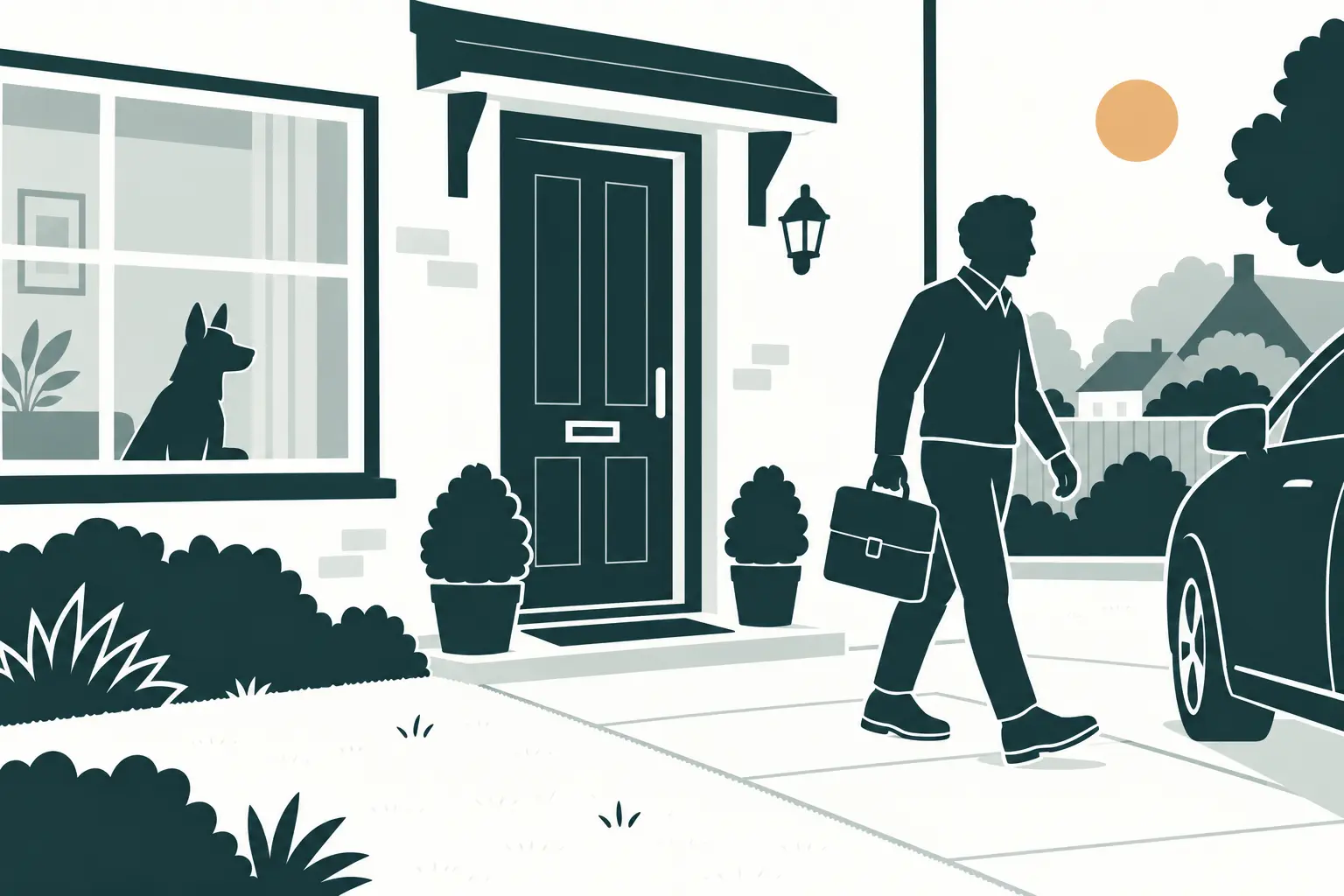
You’ve found your perfect dog (maybe on Rescue Finder!), you’ve read the bio twice, and you’re already picturing them curled up on your sofa. But then you think to yourself: I work full time. Is that fair on a dog?
It’s one of the most searched questions among potential adopters, and for good reason. It’s a genuinely important one to get right, both for your own sake and for the dog’s. The honest answer is: it depends. Not on whether you work full time, but on what your full-time job actually looks like, what support you can put in place, and what kind of dog you’re hoping to bring home.
This guide won’t just tell you what you want to hear. It’ll tell you what rescue centres, vets, and dog behaviourists actually know about dogs and alone time, and how to work out, honestly, whether now is the right time for you to adopt.
Why This Question Matters So Much
Dogs are highly social animals. Left alone for too long, too often, they can develop separation anxiety, destructive habits, or simply live a worse quality of life than they deserve. Every major UK animal welfare organisation such as the RSPCA, PDSA, Dogs Trust, and Blue Cross recommends no more than four hours alone for a healthy adult dog, because this is roughly the point at which stress hormones begin rising and the first behavioural signs of distress appear.
This isn’t just a guideline rescues hand out to be cautious. Under the Animal Welfare Act 2006, owners have a legal duty to ensure the well-being of their pet, and could be found in breach of the act if their dog is found to be suffering from being left alone. There’s no fixed legal time limit.
So when a rescue asks about your working pattern during the adoption process, they’re not being nosy. They’re trying to prevent exactly the outcome nobody wants: a dog returned to the shelter a few months later because the reality of full-time work and an under-exercised, anxious dog didn’t mix.
The Honest Pros of Adopting While Working Full Time
It’s not all bad news. Plenty of full-time workers are excellent dog owners, it just takes planning.
You Can Still Give a Dog a Brilliant Life
A consistent routine, decent income to cover food, vet bills, and insurance, and the structure of a working day (which often means consistent wake-up and walk times) can actually suit many dogs very well. Dogs are creatures of habit, and a predictable 8am walk, midday break, and evening walk routine can be more stable than an owner who’s home all day.
You’re in a Strong Position to Use Paid Support
Full-time employment usually means a steady income, which can mean there’s enough in the budget for a dog walker, doggy daycare, or pet sitter. These are solutions that genuinely close the gap for many working owners (more on costs below).
Some Dogs Are Far Better Suited to Your Lifestyle Than Others
This is the big one. Rescue centres don’t put every dog up for adoption with the same needs. Many rescue dogs, particularly older dogs, low-energy breeds, or dogs who’ve already been assessed by foster carers as settled and confident alone, are well suited to a working household. A six-month-old Border Collie puppy is very different to a calm seven-year-old Greyhound who’s used to their routine.
Adopting, Rather Than Buying, Means Honest Matching
Reputable rescues assess each dog’s temperament and needs before rehoming, and a good rescue will be upfront with you about which dogs would and wouldn’t suit a working pattern like yours. This is one of the strongest arguments for adopting through a rescue rather than buying a puppy: you get expert matching, not guesswork. You can learn more about the pros and cons of buying vs adopting here.
The Honest Cons and Real Challenges
Four Hours Alone Is the Recommended Maximum, and a Full Work Day Is Longer Than That
Most charities advise that dogs are left alone for no longer than four hours so they have the opportunity to exercise, go to the toilet, and spend time with people. A standard UK working day, plus commute, is typically 8–10 hours. That’s double the recommended limit, every single weekday, unless you put something in place to break it up.
Puppies and Young Dogs Need Far More Than That
Puppies don’t have a strong bladder and need frequent toilet breaks, as often as every 30 minutes when they’re very young, stretching to every couple of hours as they get a bit older. Realistically, a young puppy and a full-time office job are not compatible without a strong support plan such as daycare, a dog walker, or a family member at home during the day.
Not Every Dog Tolerates Alone Time the Same Way
A 2023 PDSA report found that 13% of dogs show signs of distress when left alone, a figure that was largely unchanged from the previous year’s report. Separation-related distress isn’t rare, and it’s genuinely distressing for the dog. Think destructive chewing, toileting indoors, excessive barking, or even self-harm through anxiety. It’s also one of the most common reasons rescue dogs are returned.
It Costs More Than You Might Expect
Even if your dog copes well with four hours alone, you’ll likely need paid support to bridge the rest of the working day. We’ve broken this down in detail below, but the short version is: budget for it before you adopt, not after.
What It Actually Costs to Make This Work
If you’re planning to use paid help to cover the working day, here’s what to expect across the UK in 2026:
- Dog walkers. Usually these cost £15-£25 an hour, depending on your region.
- Pet sitters. Also around £15 an hour on average.
- Doggy daycare. Usually better value at £25-£35 for a full day, on average.
For context, Battersea puts the typical cost of caring for a dog at around £2,000 a year, rising for medium-to-large breeds or dogs with health needs, and that’s before factoring in any daytime care. If you’re adopting while working full time, daytime support should be treated as an essential, ongoing cost of ownership, not an occasional extra. To learn more about the costs of owning a dog, read our detailed guide here.
How to Actually Make It Work: A Practical Checklist
If you’ve weighed the pros and cons, here’s how working owners make it genuinely work for their dog.
- Choose the right dog, not just the dog you fell for online. Talk to the rescue about your working pattern honestly. Ask specifically about the dog’s history with alone time; many rescues will have notes from foster carers or previous homes.
- Look at calmer, older, or already-settled dogs. Senior dogs, low-to-moderate energy breeds, and dogs who’ve already proven they can settle alone (often noted in their rescue profile) are usually a much better fit than a young, high-energy puppy. Another great reason to adopt over buying!
- Build a plan before adoption day, not after. Whether it’s a dog walker, a neighbour, a relative, or a doggy daycare a few days a week, have it arranged and budgeted before you bring your dog home.
- Consider a hybrid approach. Many working owners don’t use daily daycare or a daily walker; instead, they mix it up: daycare two or three days a week, a quick lunchtime visit from a sitter on the others, and working from home occasionally if their job allows it.
- Use the first few weeks to build alone-time tolerance gradually. The RSPCA recommends gradually introducing a dog to being left alone when they first arrive so they are far less likely to develop problems later. Teaching them early that alone time is safe and even pleasant is one of the most effective ways to prevent anxiety. If you can, take a few days or a week off work when your dog first arrives, and build up the time alone slowly: ten minutes, then thirty, then an hour, rather than leaving for a full working day on day one.
- Set up the home environment to help. Puzzle feeders, calming background noise, a comfortable safe space, and pet cameras to check in can all reduce anxiety during the hours your dog is alone.
- Have a genuine backup plan for the unpredictable days. Long meetings, travel, or sickness happen. Know who you’d call with short notice.
- Be ready to walk away from the wrong match. If a rescue tells you a particular dog isn’t suited to a working household, trust them. A good rescue would rather find that dog the right home than rush a placement that won’t last.
Which Dogs Tend to Suit Working Owners Best?
While every dog is different, some suit working owners better than others:
- Senior dogs (7+ years), typically lower energy, often already well-adjusted to a calm routine, and frequently overlooked by other adopters despite making wonderful companions.
- Calm, settled adult dogs rather than puppies or adolescents (6 months–2 years), who need far more time, training, and supervision.
- Breeds and individuals with naturally lower exercise and stimulation needs, though this varies hugely by individual dog, not just breed, so always ask the rescue directly.
- Dogs already living successfully in a foster home with a similar routine to yours. Ask whether the foster carer works, and how the dog has coped.
Frequently Asked Questions
Is it irresponsible to adopt a dog if I work full time?
Not inherently, but it is irresponsible to adopt without a plan for the hours you’re out of the house. Many full-time workers are excellent, responsible dog owners because they’ve thought it through and budgeted for support.
How long can I legally leave my dog alone in the UK?
There’s no specific legal time limit, but under the Animal Welfare Act 2006 you have a duty to prevent your dog from suffering or experiencing distress. Most charities recommend no more than four hours for a healthy adult dog.
Can I adopt a puppy if I work full time?
It’s far harder to make this work responsibly. Puppies need toilet breaks as often as every 30 minutes during the day and require much more supervision and training time than an adult dog. Most rescues will be cautious about placing puppies with full-time working applicants unless there’s a very strong support plan (such as someone working from home, or full-time puppy daycare) in place.
What's the best solution if I'm out of the house for 8+ hours?
A combination approach tends to work best: a midday dog walker or daycare to break up the day, plus building your dog’s tolerance gradually from the day they arrive. Relying on nobody checking in for a full 8–10 hour stretch is not recommended by any major UK welfare organisation.
Will rescues actually reject me for working full time?
Some might, depending on the specific dog and their policies, but many rescues are pragmatic and will work with you to find a dog whose needs match your lifestyle, rather than rejecting working applicants outright. Being upfront about your situation, rather than glossing over it, is the best way to find the right match.
How much should I budget monthly for daytime dog care?
If you need daily support, expect to budget somewhere in the region of £400–£900 a month for full-time doggy daycare, or £60–£100 a week for daily dog walks, depending on your location and how many days a week you need cover.
Is doggy daycare or a dog walker better for a working owner?
It depends on your dog’s personality. Daycare suits sociable dogs who enjoy company and play with other dogs. A solo dog walker or sitter suits dogs who get overwhelmed in groups, older dogs who prefer a quieter midday break, or dogs still settling into a new home.
Conclusion
Adopting a dog while working full time isn’t a yes-or-no question, it’s a planning question. The dogs who struggle aren’t struggling because their owner has a job; they’re struggling because nobody put a realistic plan in place before adoption day.
If you’re honest about your hours, realistic about the costs of a dog walker or daycare, and open to a dog whose needs genuinely match your lifestyle, such as a calmer adult or senior dog rather than a puppy, there’s no reason a full-time job should rule out being a brilliant dog owner.