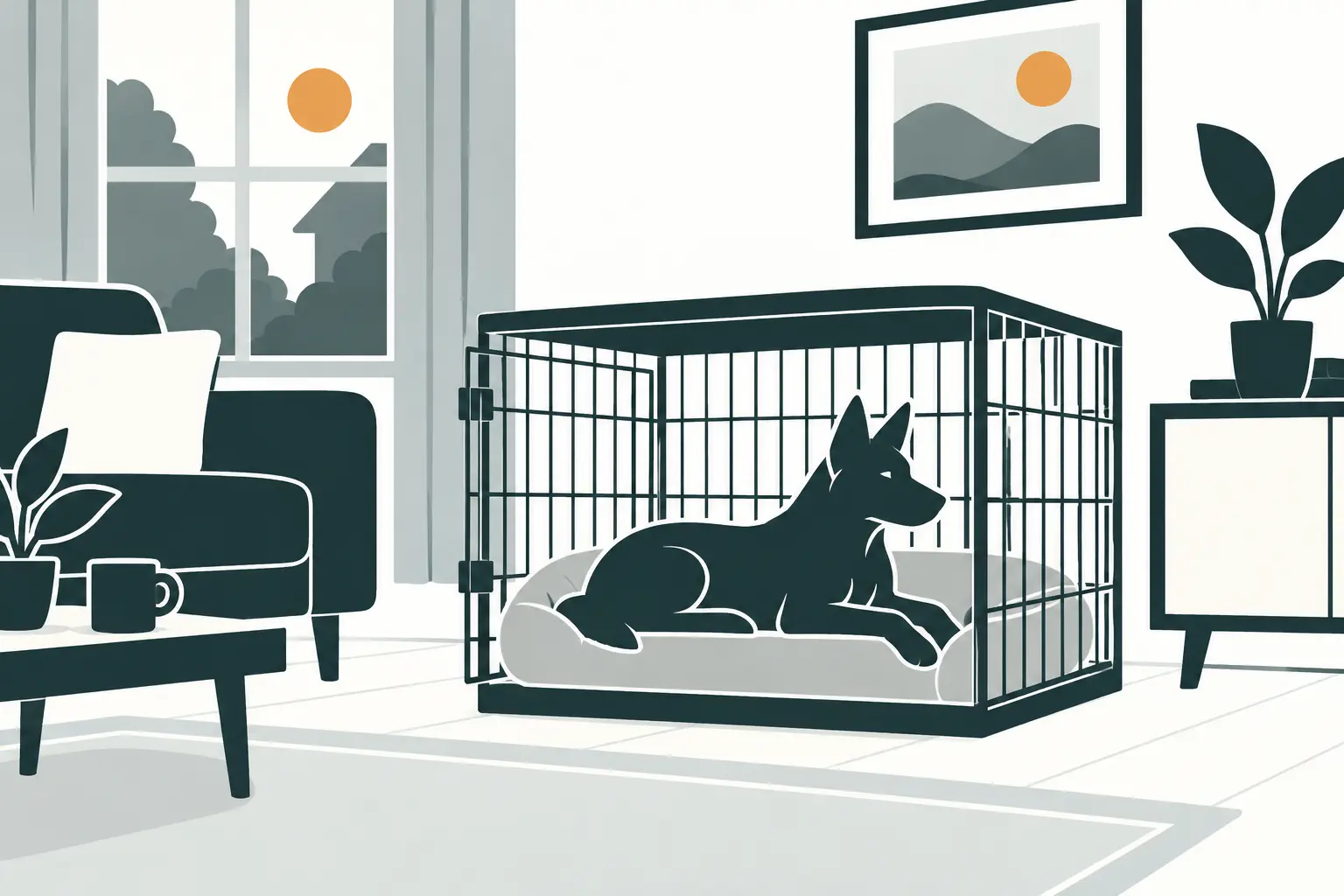
Dogs often love having a crate that they can go in to relax or sleep at night, but it’s not for every dog and for a rescue dog especially, it may not be the right decision. While a crate can give a rescue dog a safe, predictable place to settle, for some dogs, confinement is frightening.
Rescue dogs arrive with unknown pasts. Some have spent months in kennels. Others have been shut away or left alone for long periods. The same crate can be a sanctuary for one dog and a source of panic for another, so the real question is how your dog feels about it.
How a crate can help a rescue dog
Moving into a new home is overwhelming, even for a happy dog. A crate offers a few benefits for you both:
- A retreat. Many dogs like a small, enclosed space where they can switch off, especially when visitors or children are around.
- Routine. A regular spot to rest helps a newly arrived dog learn what the day looks like.
- Safety while you are out of sight. For short periods, a crate keeps a curious dog away from cables, shoes and anything else they could chew or swallow.
- Toilet training. Most dogs avoid soiling where they sleep, so a crate can support a routine if accidents are an issue.
- Easier travel and vet visits. A dog who is relaxed in a crate usually copes better with car journeys and stays at the vet.
When it might be a bad idea
A crate should never be a punishment, and it is not a substitute for daily activities, company or toilet breaks. Dogs shouldn’t be shut in for long stretches, so ask your rescue or vet what suits your dog’s age and health.
It could be the wrong decision if your dog:
- Pants, drools or paces frantically when the door closes
- Scratches, chews or bites at the bars
- Toilets in the crate despite being house trained
- Hurts themselves trying to escape
These can be signs of distress or separation anxiety, and forcing the issue can make them worse. Speak to your rescue, your vet or a qualified behaviourist before continuing.
A crate isn’t the only option. A baby gate, a dog-proofed room or a cosy bed in a quiet corner can give many dogs the security they need.
How to introduce a crate step by step
If the charity have advised a crate could be a good idea and you’d like to start training, make sure to go at your dog’s pace. A common rule of thumb for rescues is the 3-3-3 guide: around three days to decompress, three weeks to learn the routine and three months to feel at home. There’s no need to start crate training on day one.
- Pick the right size. Your dog should be able to stand, turn around and lie down stretched out. Add soft bedding.
- Choose the spot. Put it in a quiet corner of a room where you spend time, not shut away alone.
- Keep the door open. Let your dog sniff around it. Toss in treats and feed meals near the entrance, then inside.
- Offer rewards. Praise and offer treats whenever they walk in by themselves. Add a cue such as “bed” once they go in happily.
- Close the door briefly. Stay beside the crate, give a chew, then open it before they get worried.
- Build up gradually. Move a step away, then out of the room for a minute, and extend the time only while your dog stays relaxed.
- Give them space. The crate should be a quiet space for them to relax, free from distractions. If they are settled in their crate, avoid disturbing them so they know it’s a calm place.
Frequently asked questions
How long does it take to crate train a rescue dog?
There’s no fixed timeline. Some dogs relax in a crate within days, others need weeks or might not settle at all. Let your dog set the pace, and don’t force anything.
Should the crate be in my bedroom at night?
Some adopters find it helps to keep the crate nearby at first, because a new dog feels more secure with you close. You can move it gradually once your dog is settled.
What if my rescue dog cries in the crate?
Check their basics first: toilet, exercise and water. If they are distressed rather than briefly protesting, let them out calmly, return to an earlier step and shorten the sessions. If the crying continues, ask a qualified behaviourist for help. It may be that the crate isn’t the right choice for your dog.
Conclusion
Crate training can be a kind, practical tool for a rescue dog when it is introduced slowly and always optional from the dog’s point of view. Watch how your dog responds, keep sessions positive and never use the crate as a punishment. If your dog isn’t comfortable, a gated room or quiet bed works just as well. When in doubt, speak to your rescue or a qualified behaviourist.